

A first letter. A carefully written number. A pattern that suddenly makes sense.
There is plenty of learning happening on an exercise-book page. With thoughtful teaching, the lines and squares can become useful guides: helping students position their writing, organise their working and record their ideas. NSW education resources demonstrate these uses through handwriting guidance and practical grid-paper activities. NSW Schools Assets
The book provides the space and structure. Explicit teaching, meaningful practice and feedback bring the learning to life. NSW Education
From guided handwriting to numbers, patterns and graphing, here are ways to make that structure work for your classroom.
Helping little hands find their place
Learning to write involves more than remembering what a letter looks like. Students are also learning how to form it, how large to make it and where to place it.
Appropriate handwriting ruling gives teachers a visible reference for explaining those differences. Short letters such as a and c, tall letters such as h and l, and letters that extend below the line, such as g and y, occupy different spaces. Guided and dotted lines make those spaces available for modelling and practice. NSW Schools Assets
During a lesson, a teacher might model a letter, describe its movements and show where it sits on the ruling. Students can then practise with feedback on formation, size and placement. The lines provide guidance, but they do not replace the demonstration of how to form the letter. NSW Schools Assets
Practising pencil control and coordination
Writing by hand involves coordinating what students see with the movements of their hands and fingers. Guided letter-writing activities provide opportunities to practise those movements while working towards a clear purpose. NSW Education
For classroom practice, choose a small focus rather than asking students to improve everything at once. A session might concentrate on a starting point, a particular stroke or keeping a group of letters at a consistent height. Model the movement, allow practice and provide specific feedback before moving on. This is an application of the small-step approach described in explicit-instruction guidance. AERO
Connecting handwriting with words and ideas
Handwriting practice can sit alongside systematic phonics instruction. Students form the letters that represent the sounds they are learning, connecting letter formation with sound–letter knowledge. As handwriting becomes more fluent and automatic, students can devote less attention to producing individual letters and more to what they want to communicate. NSW Education
A lined exercise book can be used for that practice throughout the school day. Try recording familiar words after a phonics lesson, writing a sentence about a shared text, or adding a written observation to a science activity. These tasks offer opportunities to revisit letter formation while also practising spelling, word spacing, punctuation and sentence construction.
Giving numbers room to make sense
In mathematics, the page has a different job. Students need somewhere to represent quantities, organise numbers, record strategies and explain their thinking. These are important parts of learning mathematics—not simply producing a correct answer. NSW Curriculum
Grid books provide a framework for recording that work. The following activities are practical suggestions for using grids alongside teacher modelling, discussion and hands-on resources.
Number formation and organised working
For a student practising numerals, try using a square as a visual space for each digit. Model the numeral first, then invite the student to practise it and connect it with a quantity—for example, writing 5 and showing a collection of five counters.
When students are ready for written calculations, another option is to use the grid to organise digits into columns. A teacher might model one digit per square, keeping ones beneath ones and tens beneath tens.
The grid is an organisational aid, not a substitute for understanding place value. Keep the focus on what each digit represents and why its position matters; reading, writing and representing numbers through place value are explicit elements of the NSW mathematics syllabus. NSW Curriculum
Counting, equal groups and arrays
A grid can also become a place to record arrangements made with counters or tiles.
For example, students might build three rows of four tiles, then draw or shade the same arrangement in their maths book. Ask them how they can determine the total and whether they can arrange the same number of tiles differently.
The NSW Department of Education uses this approach in its How many rectangles? activity, moving between square tiles and drawings on grid paper. It gives students a way to record and compare arrangements rather than relying on a finished number sentence alone. NSW Education
Exploring patterns
Pattern work is an opportunity to notice, describe and explain—not just colour.
For a simple classroom activity, invite students to shade a repeating sequence such as red, red, blue, then continue it across the grid. Ask: Which part repeats? What would come next? How do you know?
Students could also record a growing pattern, such as groups containing two, four and six squares, and describe what changes each time.
These are ways to apply the emphasis in NSW patterning resources on recognising a repeating unit, representing patterns and explaining missing or continuing parts. Start with objects where helpful, then use the book to record the thinking. NSW Education
Making sense of data and graphs
Graphing gives students a reason to collect information and discuss what it shows. Early experiences can begin with objects and pictures, progressing to other representations as students are ready. NSW syllabus outcomes distinguish between these stages, including object displays, picture graphs and later column graphs. NSW Curriculum
For students ready to work on a grid, try a class survey about favourite fruit. Begin by agreeing on the categories and collecting the responses. Students can then make a display using one picture or coloured square for each response.
When introducing column graphs, model a common starting line, equal units and clear labels. The grid provides a framework, while the discussion gives the graph meaning: Which category has the most responses? How many more? What can we conclude? Comparing categories from a common baseline and interpreting what a display represents are identified in the National Numeracy Learning Progression. NSW Education
Making everyday progress visible
An exercise book is also a place to keep examples of learning together.
Try dating selected pieces of work and revisiting them with students. In handwriting, compare a small feature such as letter height or spacing. In maths, ask students to explain an earlier strategy and show how they would approach the task now.
Use those examples to guide the next teaching step: perhaps another demonstration, a different representation or further practice with feedback. This keeps the focus on learning rather than filling pages. NSW Education
Choosing the ruling for the learning
Rather than treating one page layout as suitable for every task, consider what students are being asked to do.
Do they need guided lines for letter height and placement? A ruled page for sentences and everyday writing? A grid for recording number work, arrays or data?
Match the choice to the student’s current needs, the learning intention and your school’s teaching approach. Handwriting guidance should be adapted where students need additional support, rather than assuming everyone will work comfortably with the same format. NSW Education
Big space for different kinds of learning
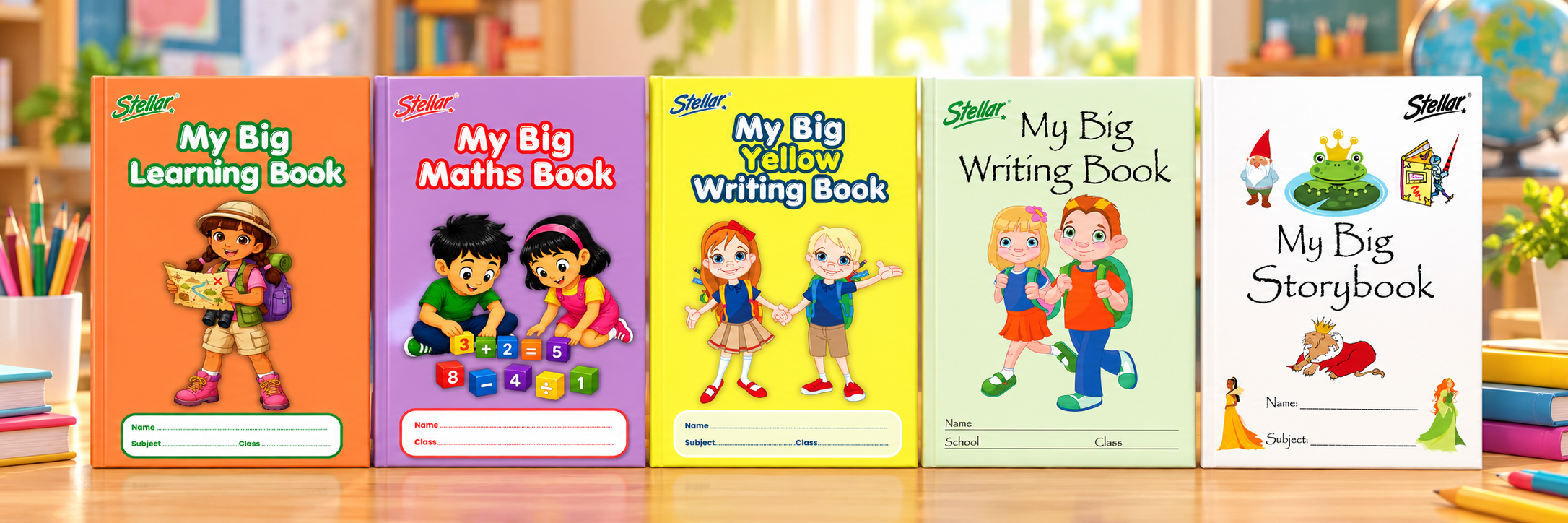
The My Big range brings different page layouts together in a generous 330 × 240 mm format. LJ Harper
Book Page layout Suggested classroom uses
My Big Yellow Writing Book 30 mm guided and dotted ruling, with space for drawing. Guided handwriting, letter practice, and pictures with accompanying writing.
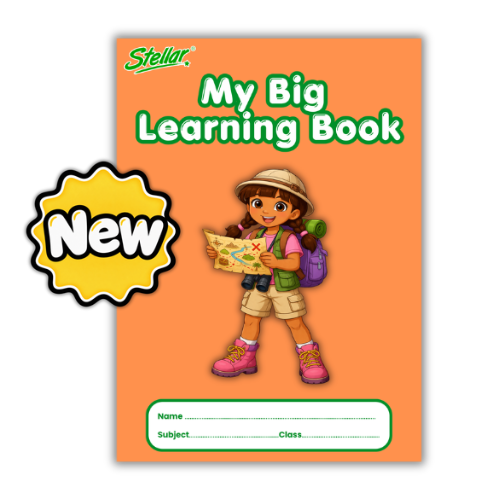
My Big Learning Book 8 mm ruling with a red margin. Sentences, stories, comprehension responses and everyday written work.
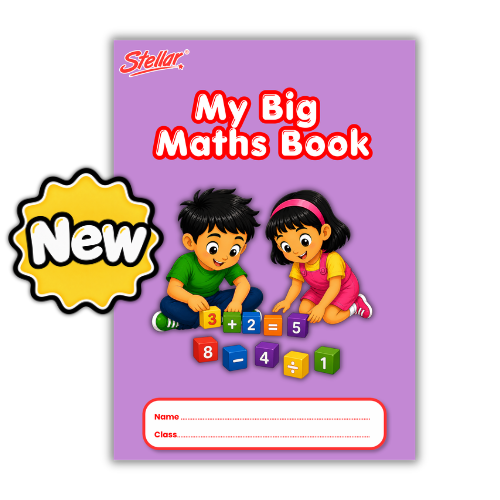
My Big Maths Book 10 mm grid. Number work, arrays, patterns and graphing activities.
The ruling specifications above are listed in LJ Harper’s product information; the classroom uses are suggestions to adapt to your students and lessons. LJ Harper
Explore the pages for yourself
Whether your students are forming their first letters, recording number patterns or explaining a mathematical idea, start with the learning—and choose the page that gives them room to practise it.
Explore the My Big range with a free sample set for your school. Share the books with your teaching team and consider which layouts suit your classroom. One free sample set is available per school, with no obligation to order. LJ Harper
Request your free My Big sample set
Tell us a little about your classroom and we will post your sample to your school
"*" indicates required fields